The Story of Bahir Dar: From Sacred Shore to Modern Metropolis
From its 14th-century sacred origins around Saint George and Kidane Mihret churches, through its 1937 first urban layout, 1943 Woreda status, 1945 Municipality charter, 1956 Awraja designation, to becoming Regional Capital in 1993 — discover the 6 Sub-Cities, 53 Kebeles, and 26 historic leaders shaping Ethiopia’s water metropolis.
Why is the City Named "Bahir Dar"?
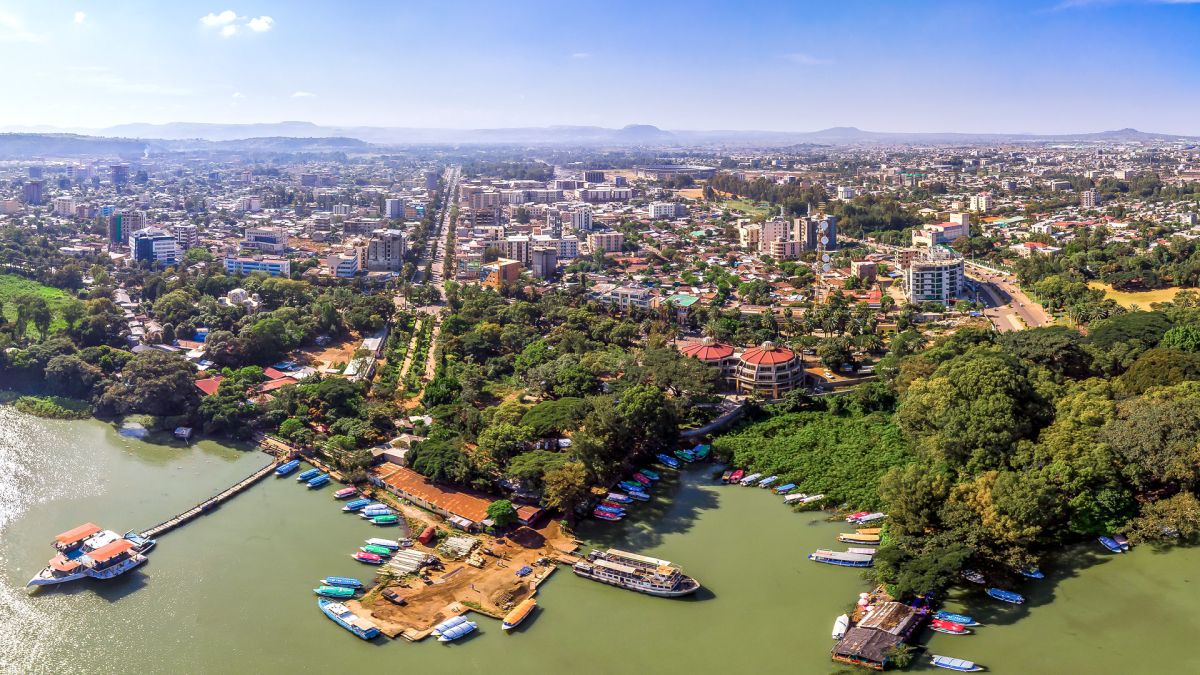
The name Bahir Dar translates literally from Ge'ez and Amharic as "Shore of the Sea" or "By the Lake". The city was founded directly upon the southern shores of Lake Tana — Ethiopia’s largest body of water and the legendary reservoir from which the sacred Blue Nile (Abay) begins its 5,200 km trans-continental odyssey.
During the 14th century, the foundational anchor of the modern settlement was established around the historic Bahir Dar Saint George (Qeddus Giyorgis) Church. Traditional merchant caravans and fishermen paddling papyrus reed boats (*Tankwa*) converged at this natural harbor to exchange commodities with the island monasteries, sealing the name into Ethiopian historiography.

Bahir Dar City: Official Milestones of Urban Rise
Key chronological thresholds transforming Bahir Dar from a 14th-century shoreline village into a flourishing regional capital of 6 sub-cities and 53 kebeles.
Kidane Mihret Church & Village Settlement
During the 14th century, Kidane Mihret Church was consecrated on the exact location where Felege Genet Saint George Church stands today, anchoring Bahir Dar as an initial settlement. By 1928 E.C. (1935/36), it had grown into distinct community villages known as Kahnat, Balabat, and others.
Inception of Urban Master Planning
In 1929 E.C. (1937 G.C.), the inaugural urban development layout and town plan was formally drafted for Bahir Dar, charting its transformation toward an organized modern metropolis.
Designated as Autonomous Woreda Town
In 1935 E.C. (1943 G.C.), Bahir Dar was officially elevated to a Woreda administrative center, anchoring judicial, trade, and regional services.
Elevated to Full Municipality
In 1937 E.C. (1945 G.C.), Bahir Dar earned municipality charter status, establishing structured municipal leadership, sanitation, and civic infrastructure.
Designated as "Bahir Dar Awraja"
In 1948 E.C. (1956 G.C.), the city was officially recognized as the provincial capital of "Bahir Dar Awraja", unifying the broader Lake Tana basin and Blue Nile territories.
Capital of Amhara National Regional State
In 1985 E.C. (1993 G.C.), Bahir Dar was inaugurated as the supreme capital city of the Amhara National Regional State (ANRS), going on to win the UNESCO Cities for Peace Prize and UNESCO Learning City Prize.
Six Epochs of Transformation
Crucial historical epochs that shaped modern Bahir Dar
Origins: Medieval Lake Tana Monasteries & St. George Church
Bahir Dar's earliest recorded roots trace back to the 14th century, intertwined with Lake Tana's sacred island monasteries. The original settlement crystallized around the Saint George Church.
Emperor Susenyos & The 1626 Historic Nile Stone Bridge
In 1626, Emperor Susenyos commissioned the construction of the famous arched stone bridge over the Blue Nile gorge near Tis Issat, cementing the settlement as an indispensable corridor.
The Patriotic Resistance: Dejazmach Belay Zeleke
During the fascist Italian invasion, Bahir Dar and its surrounding ridges became a crucible of unyielding patriotic resistance, immortalized by the legendary patriot leader Dejazmach Belay Zeleke.
Emperor Haile Selassie: Bezawit Palace & The 1962 German Master Plan
Emperor Haile Selassie I erected the majestic Bezawit Palace atop Bezawit Hill. In 1962, German town-planning professors Max Guther and Karl Klinkmüller drew up Bahir Dar's iconic master plan — gifting the city its signature wide tree-lined palm boulevards.
Regional Capital & UNESCO Cities for Peace Prize
In 1991, Bahir Dar was inaugurated as the Capital City of the Amhara Region. In 2002, UNESCO conferred upon Bahir Dar the prestigious UNESCO Cities for Peace Prize.
UNESCO Learning City, Smart Corridors & Sustainable Tourism
In 2015, Bahir Dar joined the elite UNESCO Global Network of Learning Cities. Today, featuring 14 kilometers of smart lakefront promenades, segregated green cycling corridors, and luxury waterfront resorts, Bahir Dar thrives as Ethiopia's premier eco-tourism destination.
Bahir Dar City: 6 Sub-Cities & 53 Kebeles
Bahir Dar currently operates through 6 Sub-City clusters encompassing 53 kebeles, 2 Lead Municipalities (Zege & Tis Abay), and 1 Sub-Municipality (Meshenti).
Tana Sub-City Cluster
Lake Tana Port, Zege Peninsula & Waterfront Kebeles
Belay Zeleke Sub-City Cluster
Tis Abay Lead Municipality, Sebatamit & Patriot Corridors
Dagim Minilik Sub-City Cluster
Meshenti Sub-Municipality, Marzenev & Commercial Corridors
Atse Tewodros Sub-City Cluster
Zenzelma, Ayertena, Maraki & North-East Expansion Kebeles
Gish Abay Sub-City
Giyon, Selamber, Hidase & Abnet Kebeles
Fasilo Sub-City
Kebele 01, Kebele 02, Kebele 03 & Kebele 04
The Leaders of Bahir Dar: From Administrators to Mayors
A comprehensive chronicle honoring the 26 mayors and city administrators who guided Bahir Dar from 1934 E.C. (1942 G.C.) to the present day.
Dejazmach Gila Woldegiyorgis
City Administrator
Balambaras Werkneh Kasa
City Administrator
Mezgebu Tibebu
City Administrator
Fitawrari Hailemaryam W/Kidan
City Administrator
Ato Belay Kebede
City Administrator
Meto Aleka Abayneh Isa
City Administrator
Ato Werqu Mersha
City Administrator
Ato Bekele Anley
Transitional Administrator
Ato Nibretu Genetu
Transitional Administrator
Ato Debasu Mengistu
Regional Capital Administrator
Ato Gezu Eshetu
City Administrator
Ato Awelachew Wube
City Administrator
Ato Keralem Sallew
City Administrator
Ato Tefera Tadios
City Administrator
Ato Getahun Berhanu
City Administrator
Ato Marye Kefyalew
City Administrator
Ato Yayehadis
City Administrator
Ato Alemayehu Sewagene
Administrator / Mayor
Ato Simachew Wondimagegne
City Mayor
Ato Lake Ayalew
City Mayor
Ato Ayenew Belay
City Mayor
Ato Muluken Ayehu
City Mayor
Dr. Mehari Taddese (PhD)
City Mayor
Dr. Dires Sahlu (PhD)
City Mayor
Ato Goshu Endalamaw
Incumbent City Mayor
Essential Historic Sites to Visit in Bahir Dar
Bezawit Imperial Palace
Built by Emperor Haile Selassie atop Bezawit Hill, commanding panoramic vistas of Lake Tana and the Blue Nile source.
Felege Genet St. George Church
The foundational cradle around which the earliest shoreline settlement evolved into modern Bahir Dar.
Tis Issat Stone Bridge (1626)
First monumental masonry bridge erected across the Blue Nile gorge during Emperor Susenyos’s reign.
Discover & Experience Beautiful Bahir Dar!
Discover Lake Tana’s medieval island sanctuaries, the majesty of Blue Nile Falls, palm-fringed boulevards, and Ethiopian warmth.